
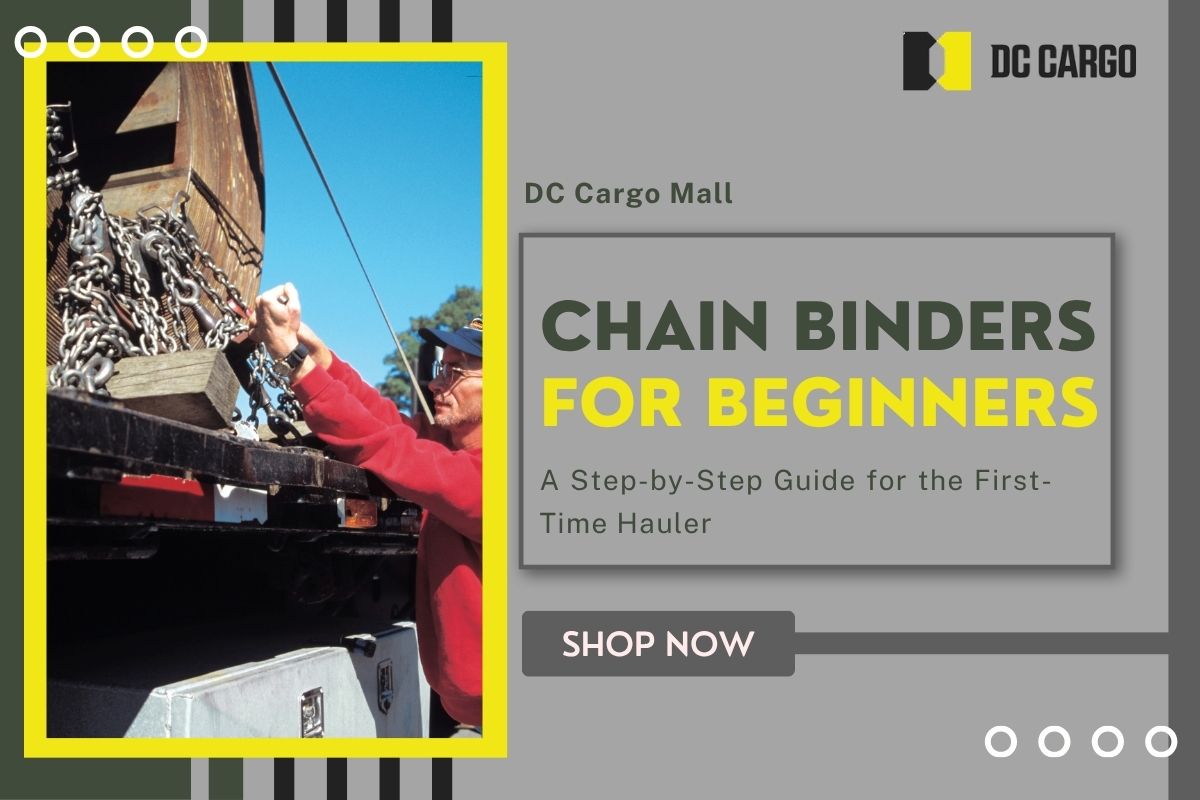
You have successfully rented or purchased a heavy piece of equipment, perhaps a mini-excavator or a utility tractor. You are ready to haul it home on your flatbed trailer. But then the anxiety hits. The responsibility of securing thousands of pounds of steel for highway travel feels intimidating. Securing the load is not simply about avoiding a traffic fine. It is about everyone else's safety on the road and protecting your valuable investment from damage. This is the moment when you realize you need professional-grade cargo control.
The answer to this hauling anxiety is the proper use of chains and binders. These tools are the industry standard for securing heavy freight because they offer unparalleled strength and reliability. Demystifying this equipment is the first step toward becoming a confident hauler. You do not need to be a mechanic or a veteran trucker to master this process. By the end of this practical guide, you will understand the essential tools, know how to calculate the strength you need, and secure your first heavy load with competence and safety.
The Essential Tools: Knowing Your Securement System

A successful tie-down setup requires two key pieces of hardware that work together. Understanding the function of each component is vital for safe operation.
Transport Chains: The Backbone of Hauling
The chain is the direct link between your cargo and the trailer. When dealing with heavy equipment, you cannot use a cheap utility chain. The Federal Motor Carrier Safety Administration (FMCSA) mandates specific standards for load securement devices.
Grade Focus (G70): The industry standard for heavy-duty tie-down applications is Grade 70 (G70) chain. It is heat-treated to achieve high tensile strength, providing excellent wear resistance. You will find the G70 chain marked with "70" or "7" on the links.
The Power of WLL: The single most important number on your chain is its Working Load Limit (WLL). This is the maximum weight the chain is engineered to handle in a straight-line pull safely. The combined WLL of all your securement devices must equal at least 50% of the cargo’s total weight. For example, a common 3/8-inch G70 transport chains have a WLL of 6,600 pounds.
The Binders: Where the Force is Applied
The chain binder is the mechanical device that takes the slack out of the chain and applies intense tension, securing the load firmly to the deck.
The Two Families: There are two primary types of chain binders available on the market: Ratchet Binders and Lever Binders. They achieve the same goal but operate in very different ways.
Ratchet Binder Advantage: The Ratchet Binder is the ideal choice for beginners. It uses a gear-and-pawl system to incrementally tension the chain. This controlled action requires less physical force and stores minimal energy in the handle. This design greatly minimizes the risk of handle "snapback" or recoil, making it the safest option for novices.
Lever Binder Caution: The Lever Binder, also called a "snap binder," uses mechanical leverage to secure the load with a single quick throw of the handle. While faster to apply and release, it requires significant physical strength to operate and stores a high amount of energy in the handle when locked. If released improperly, this design presents a higher safety risk.
Preparing for a Safe Haul: Before You Touch the Chain
Before you place any chain on your load, you must perform several checks. A great securement job starts with proper preparation.
Cargo Inspection
Always treat the item you are hauling as a complex, heavy object with its own rules.
Confirm Stability: Ensure the cargo is stable and centered on the trailer. Distribute the weight evenly to prevent sway and instability during transport.
Rated Connection Points: Heavy equipment features designated tie-down points, usually heavy-duty loops or specific metal structures. Use these rated points exclusively. Never wrap a chain around a hydraulic line, a thin axle, or a weak cosmetic component.
Trailer Check
The load is only as secure as its weakest link. Your trailer must be ready to accept the forces from the secured cargo.
Anchor Point WLL: Every anchor point on your trailer, such as D-rings or rub rails, has its own WLL. This rating must be equal to or greater than the WLL of your chains and binders. Using a 6,600-pound chain on a 3,000-pound D-ring means the D-ring will fail first.
Clear the Deck: Remove any loose debris, wood, or stones from the deck surface to ensure the cargo sits flat and makes maximum contact with the trailer.
Required Tie-Downs
The FMCSA sets strict guidelines for tie-down requirements to prevent loads from shifting. Following these rules is not optional.
Rule of Thumb: Any article of cargo over 1,100 pounds requires at least two tie-downs.
Length Requirement: For cargo under 5 feet in length and over 1,100 pounds, two tie-downs are required. For cargo over 5 feet in length, you need one tie-down for every 10 feet, plus one more to secure the article.
Step-by-Step: Securing Your Load Like a Pro

Now that your cargo and trailer are ready, follow these four simple steps for a professional tie-down.
Step 1: Drape and Hook
This step involves running the chain from the trailer to the load and back to the trailer.
Chain Placement: Run the chain over the sturdiest part of the cargo. The ideal line of pull is a diagonal angle (ideally 45 degrees or less) to resist movement in multiple directions.
Initial Connection: Attach one end of the chain using its hook to a trailer anchor point. Extend the chain over the cargo and hook the other end to the cargo's designated tie-down point. You want the chain to be taut, but with enough slack remaining to connect the binder.
Step 2: Setting the Binder
This is where you integrate the binder into the securement line.
Binder Placement: Place the binder on the section of the chain that runs between the cargo and the trailer anchor point.
Initial Connection: Connect the binder's hooks to two separate links of the chain. You should be able to make this connection without applying any muscle force to the chain. If the chain is too tight to connect the binder, pull the chain to gain an extra link or two.
Step 3: Achieving Tension (The Power Stroke)
This is the final, critical step where you eliminate slack and apply the securing force.
Ratchet Technique: If using a ratchet binder, place the handle in the ratchet position. Pump the handle back and forth incrementally. The tension will increase slowly and safely. Stop when the chain is taut, and you can no longer move the handle easily.
Lever Technique (Use Caution): If using a lever binder, you must move the handle in a single, powerful motion to pull the binder over its center point. The final snap locks the tension. Always ensure your hands and fingers are clear of the mechanism before executing the final snap.
Step 4: Final Safety Check
After securing all points, perform a final inspection before moving your vehicle.
Visual Confirmation: The chains and binders for sale should be tight, without any slack, twists, or kinks. The binder handles must be fully locked, either snapped over-center (lever) or secured (ratchet).
Tug Test: Give the cargo a quick, firm shove to confirm that the load is immovable on the deck.
Confidence for the Road Ahead

Mastering the use of chain binders transforms a stressful hauling event into a routine, safe operation. You now possess the knowledge to choose the correct G70 chain size, calculate your necessary WLL, and correctly apply the tension required to protect your cargo and comply with federal law. This competence eliminates the anxiety of hauling heavy gear. You are no longer a beginner; you are a responsible, knowledgeable hauler.
Do not settle for substandard hardware that compromises safety and compliance. To outfit your trailer with high-quality, DOT-compliant chains and binders, visit the DC Cargo Mall Transport Chain collection today.


